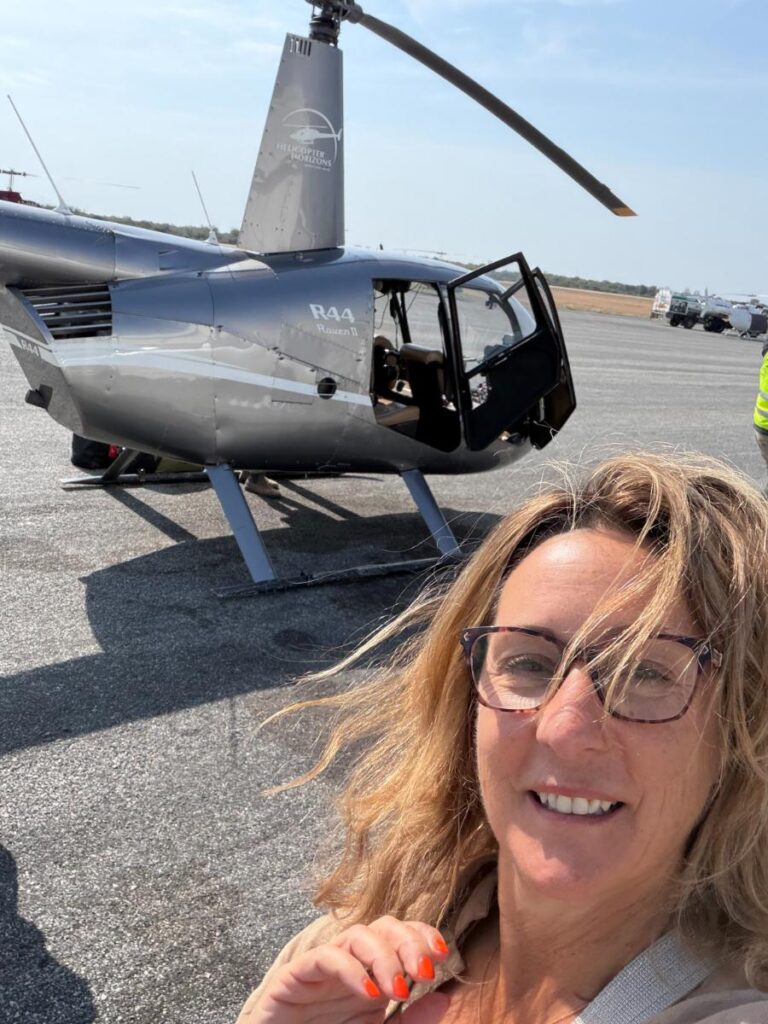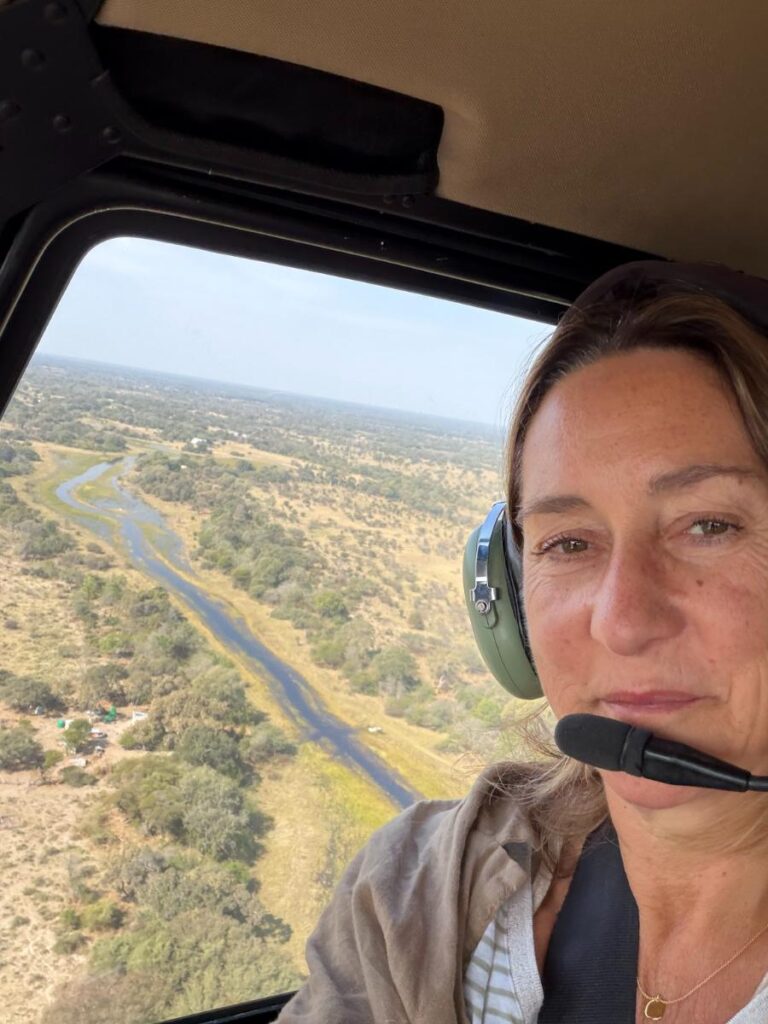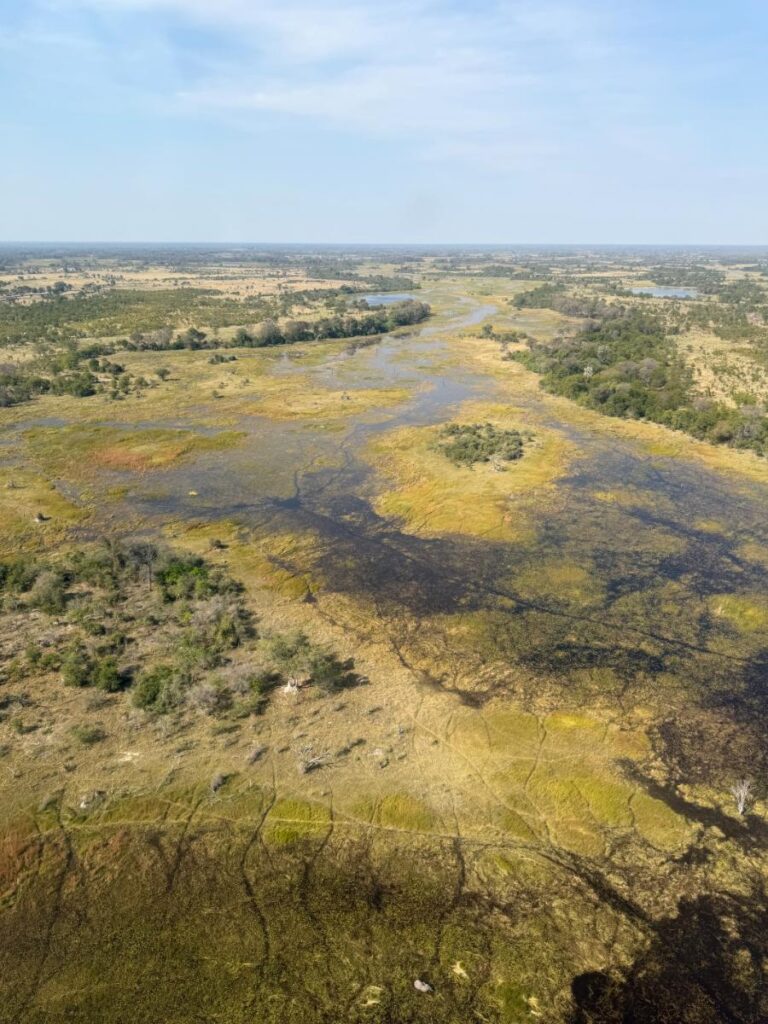
Twelve minutes in a helicopter from Maun, and I landed in a different world.
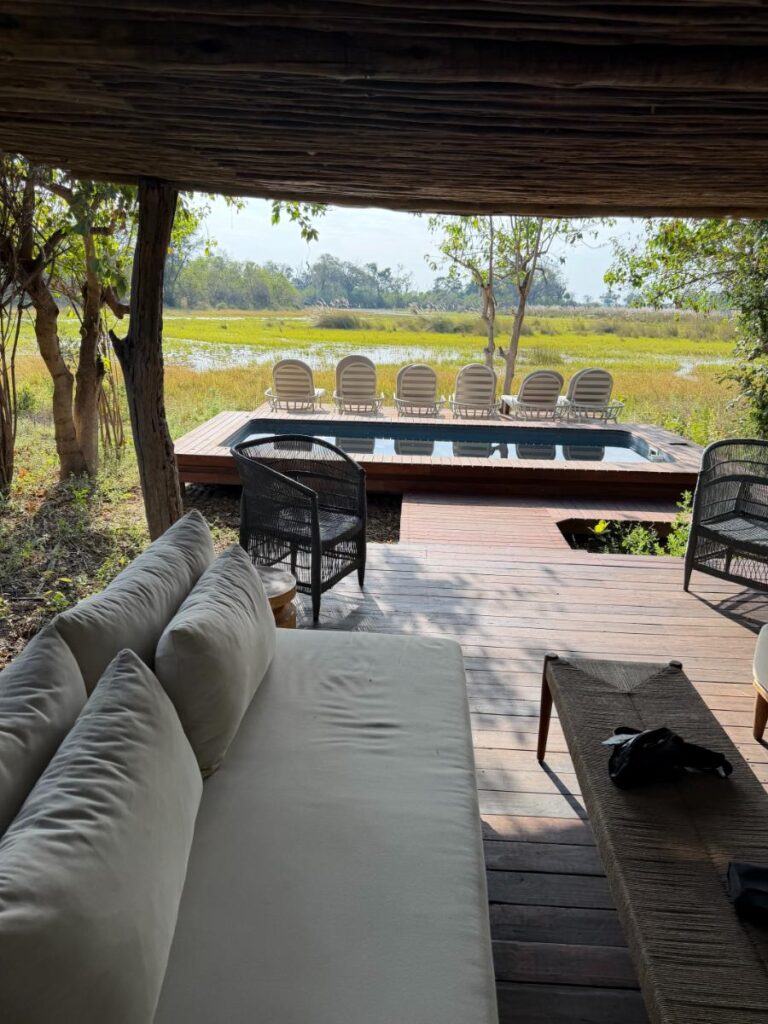
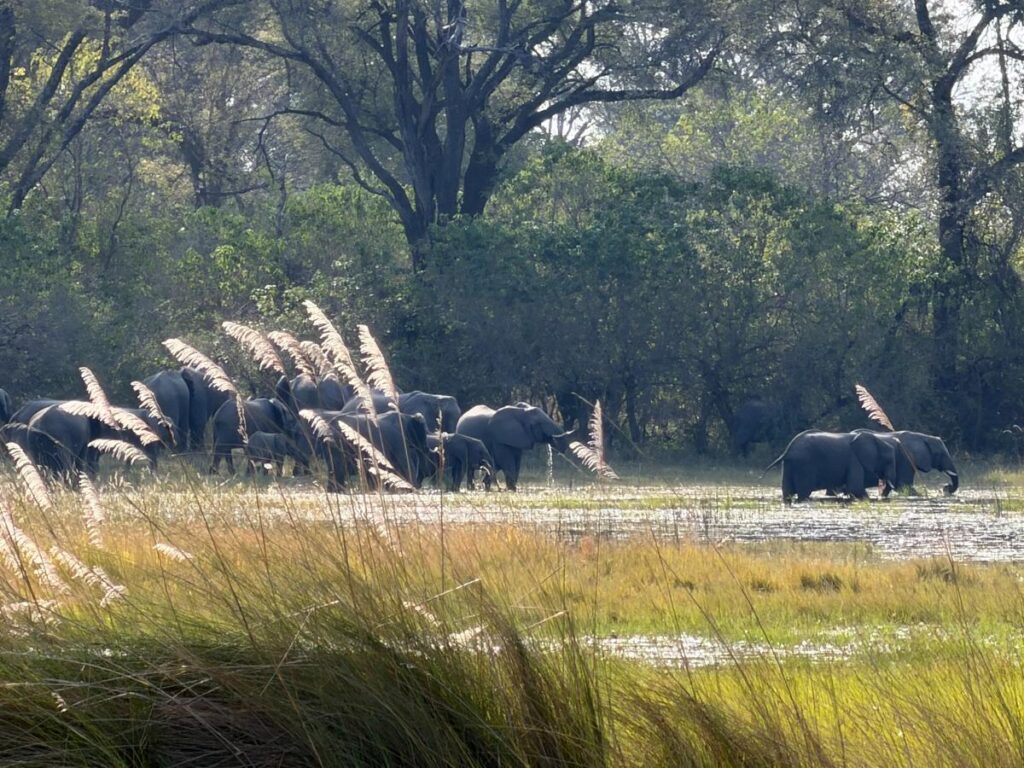
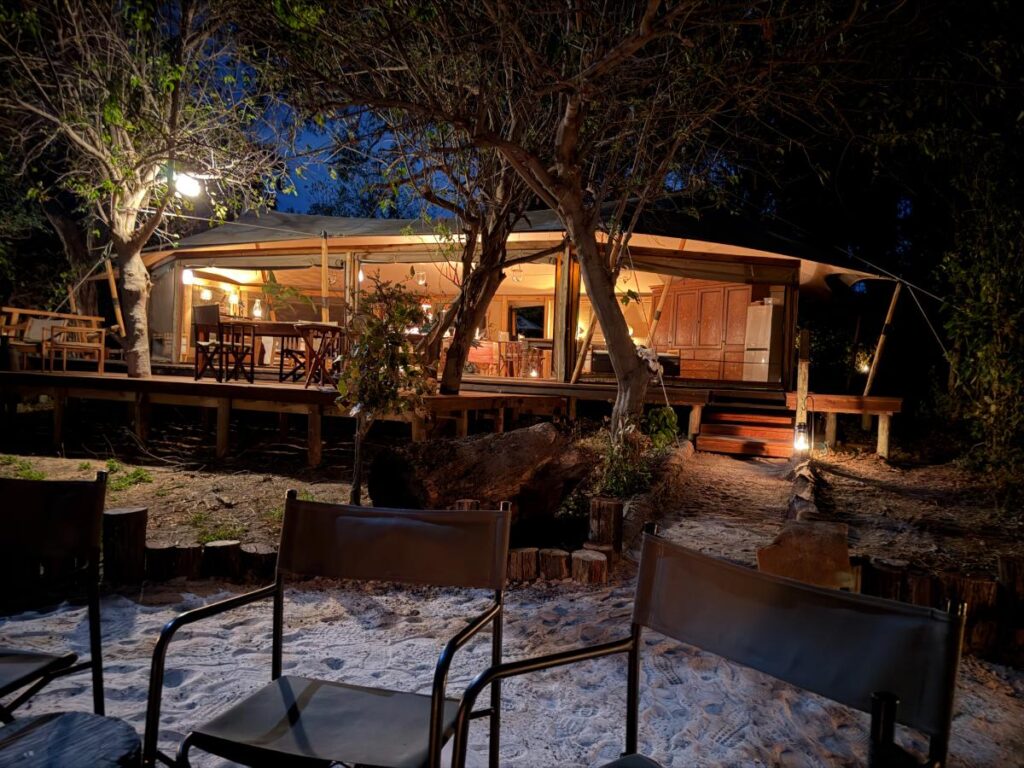
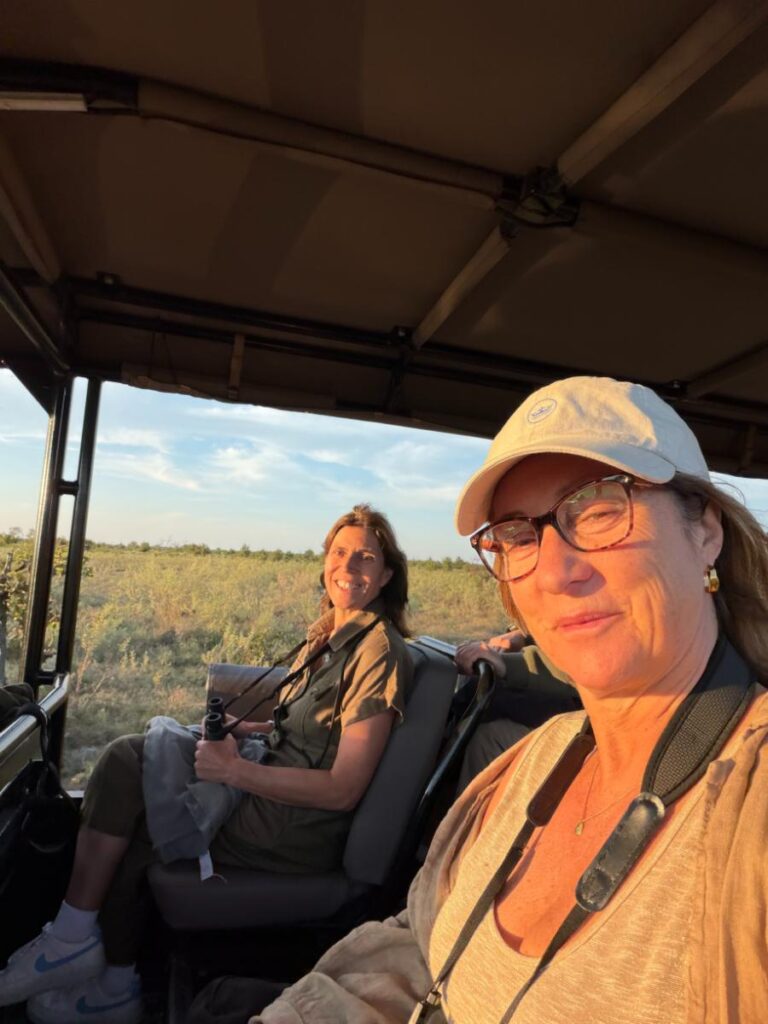
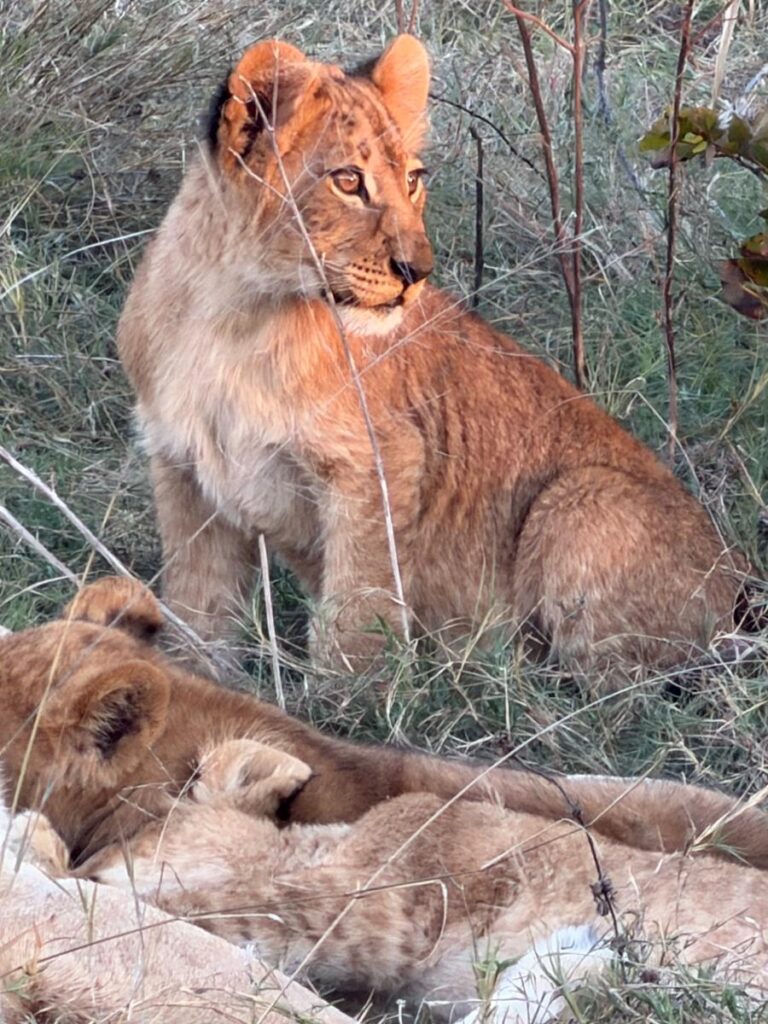
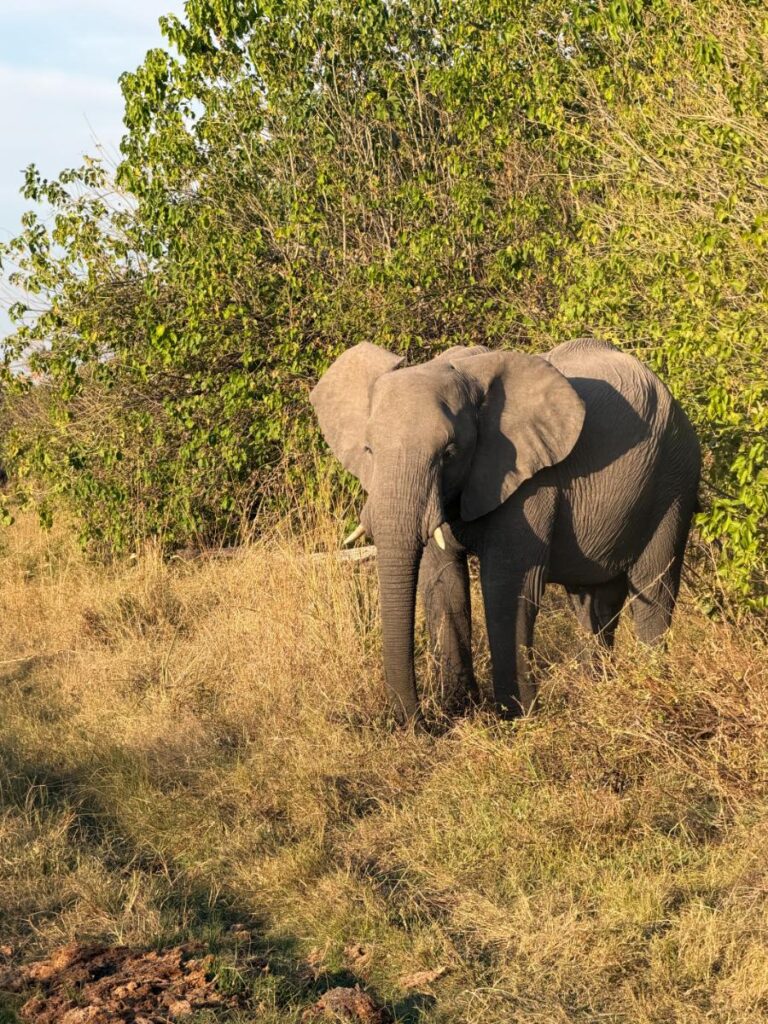
Cha Cha Metsi Lodge sits in the Okavango Delta like a secret: six rooms, completely remote, more exclusive than anything I had imagined when I said yes to Paula’s message eleven months earlier. We arrived to lunch laid out in the open air and a herd of elephants feeding quietly in the middle distance. After the noise and pace of everything that had come before, the contrast was almost physical.
I had been waiting for this trip for a year. I had imagined it countless times. And almost everything I imagined turned out to be slightly wrong, in the best possible way.
Days and Nights in the Delta
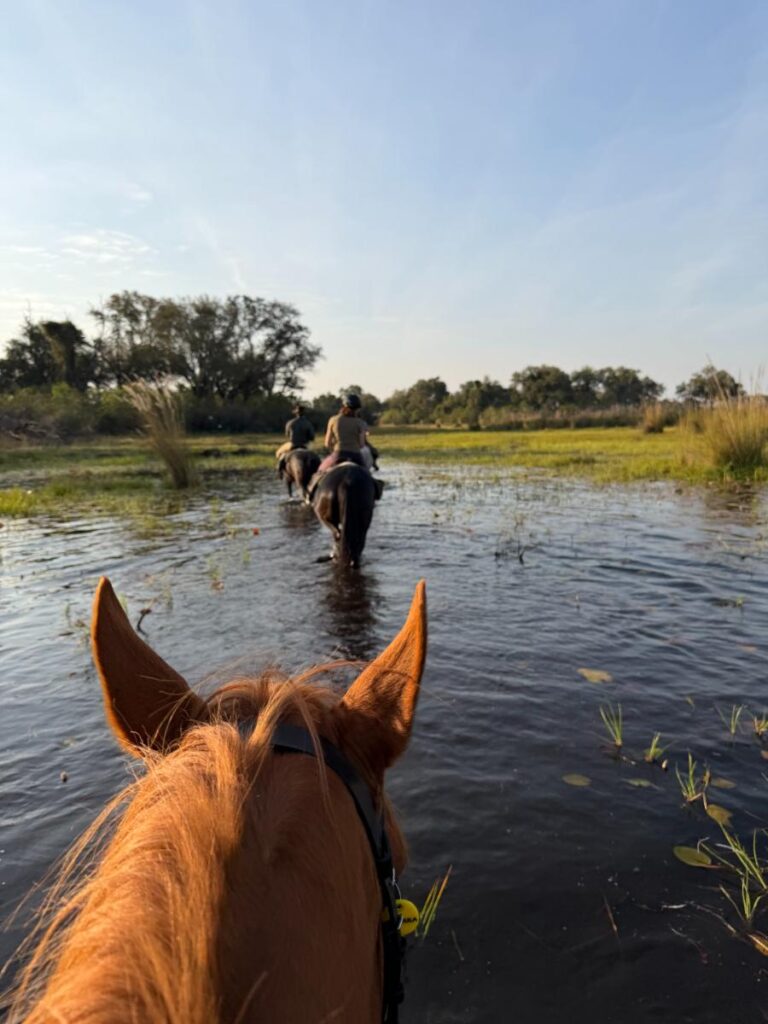
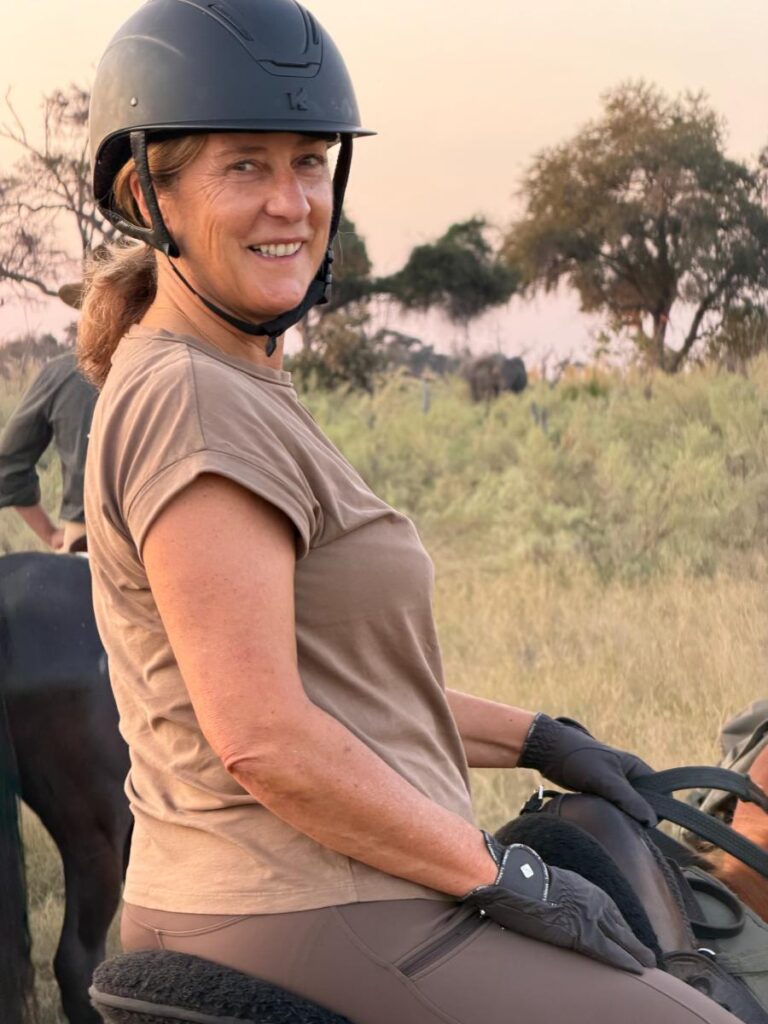
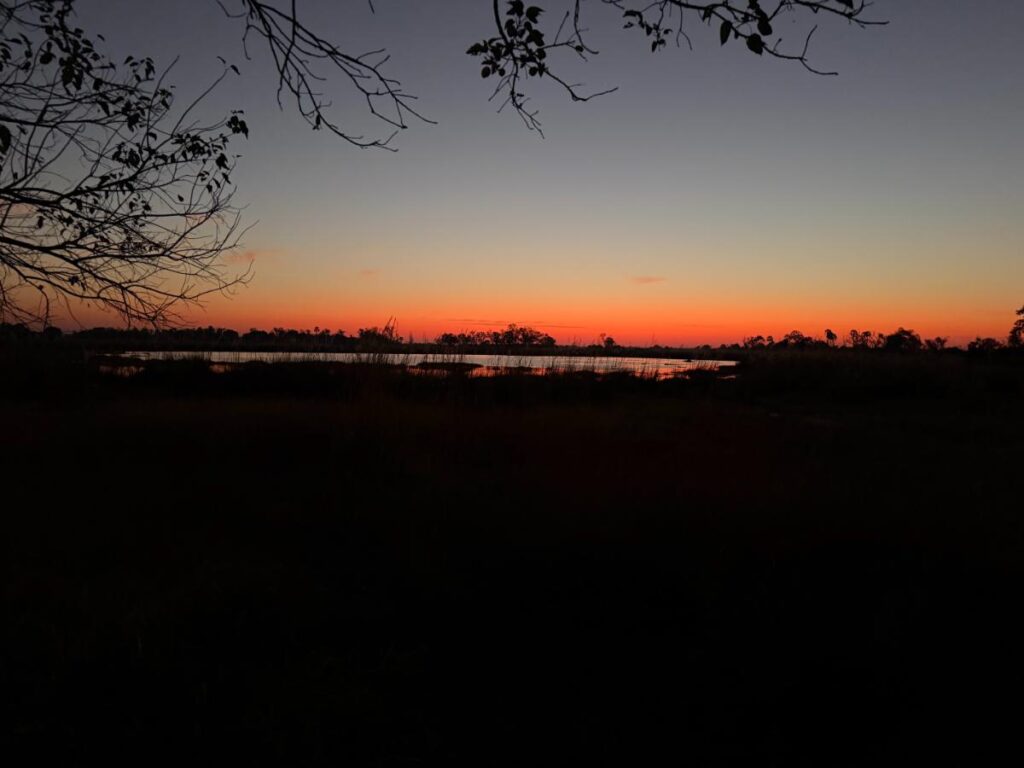
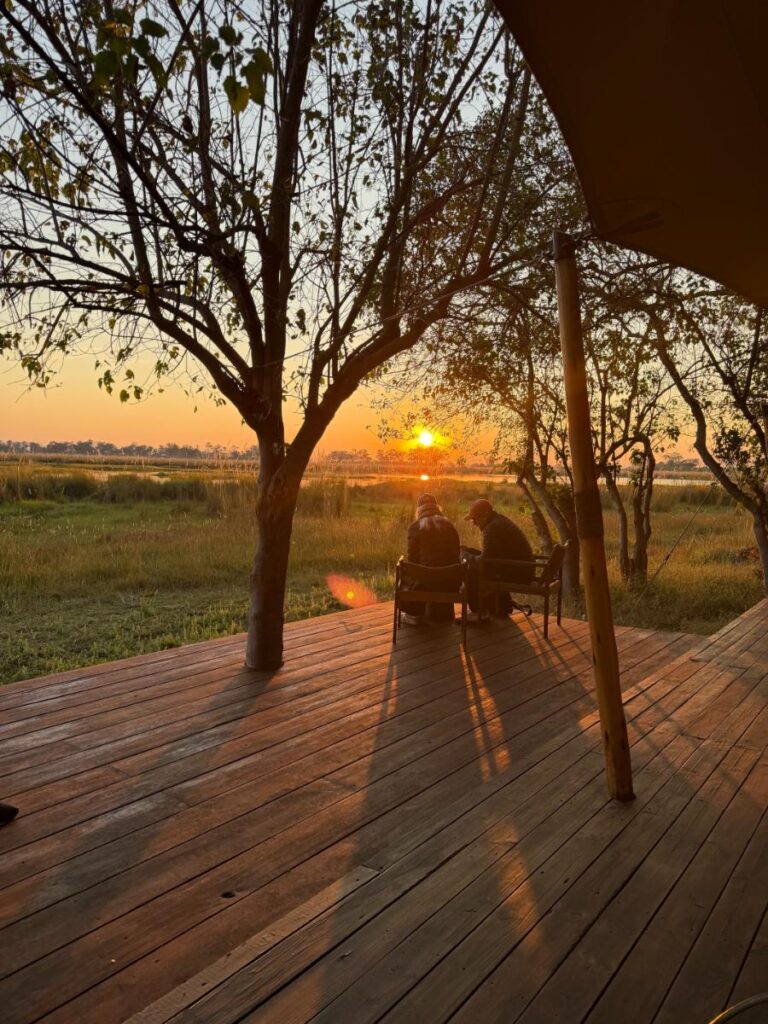
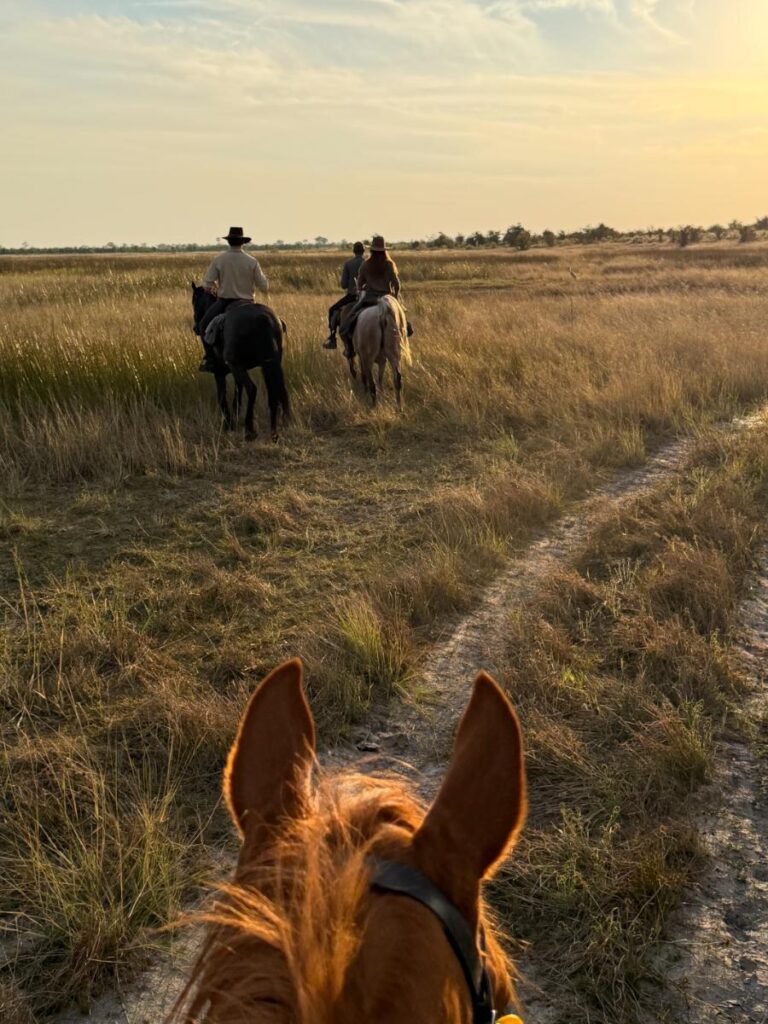
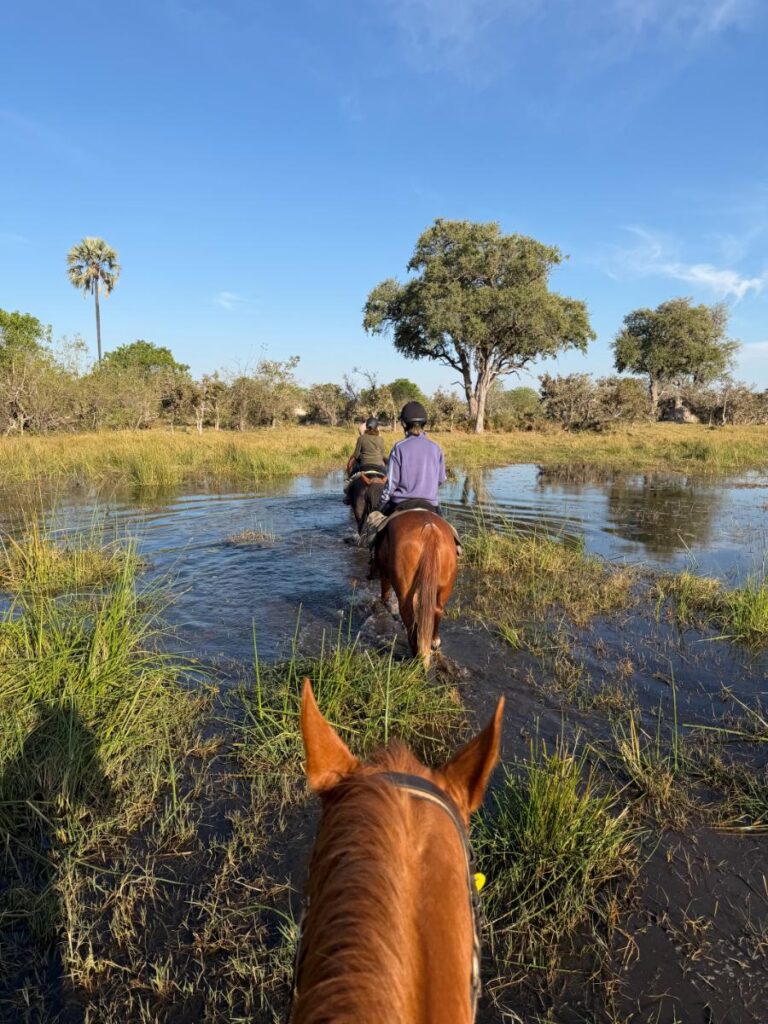
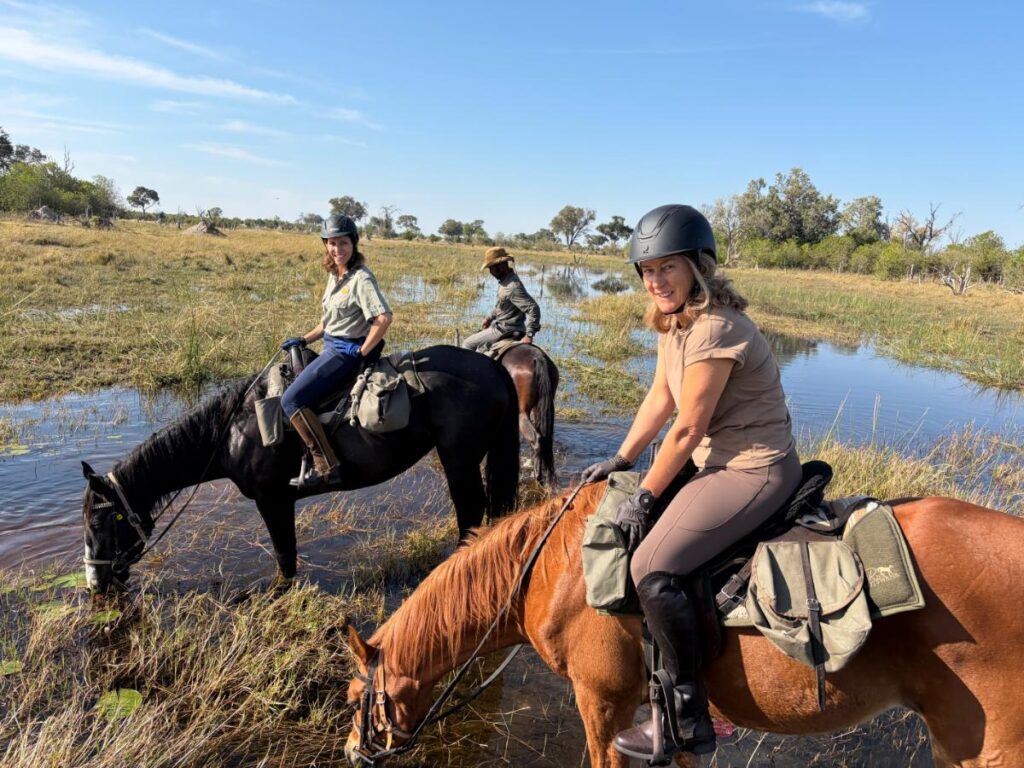
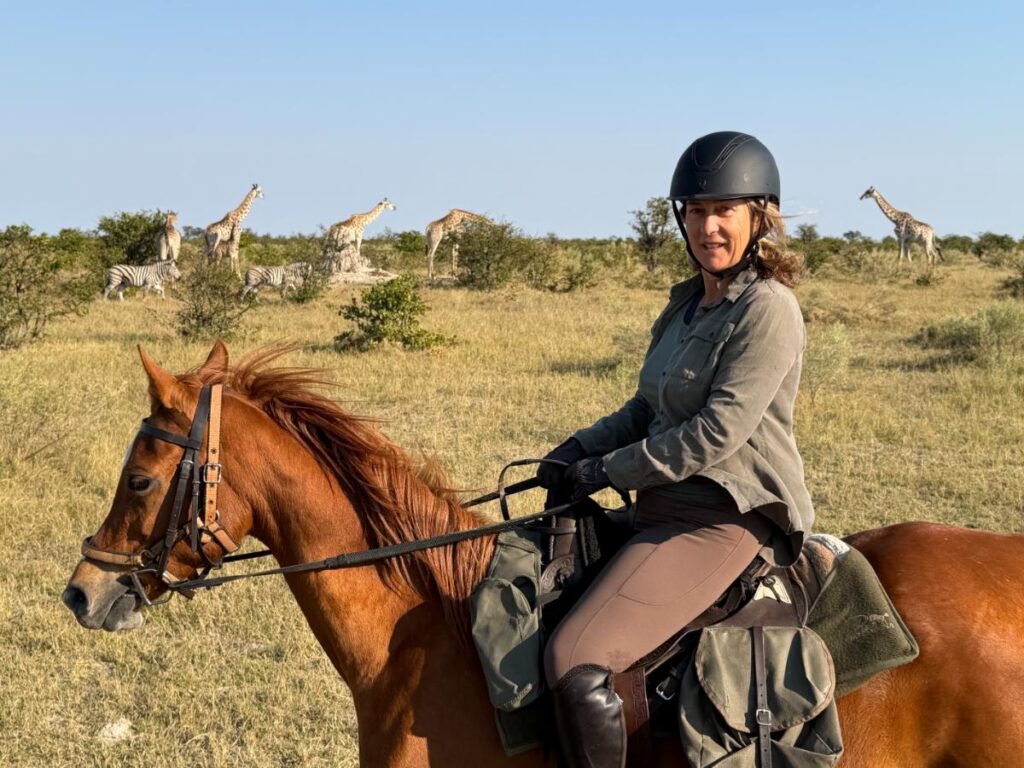
The rhythm of life at Cha Cha Metsi was unlike anything in my normal world. Up at half six every morning to a sunrise that stopped me mid-thought, the kind of sky that reminds you the planet is doing something extraordinary whether you are watching or not. Riding out by half seven, four hours in the saddle through open bush and floodplain, the ground ahead dotted with aardvark holes and the occasional African savanna hare darting through the grass. Back for lunch. A rest. And then out again in the evening for an hour and a half, riding into the light as the sun went down over the water.
And then, the hippos.
For the first three days, a pod of hippos settled in the area just in front of the camp. Once the sun went down, they came alive, out of the water, moving through the darkness, and extraordinarily, almost comically loud. From our bedroom, the noise was so close and so clear it was hard to believe these were wild animals going about their evening rather than something staged for effect. I was grateful for my earplugs. But even with them, there was something about falling asleep to that sound (raw, ancient, completely indifferent to us) that felt significant. We were visitors. This was theirs.
“I hadn’t expected to feel restored. I had expected to feel exhilarated. As it turned out, both were possible, and the restoration was the greater gift.”
The Thing I Didn’t Expect
It felt like a retreat.
I had gone thinking about the riding. The doing of it. The physical challenge, the adrenaline, the galloping through channels I’d seen in photographs. What I hadn’t anticipated was the quiet.
When you ride in the Okavango Delta, you ride single file. You don’t talk. You have to stay alert and move gently, because you are a guest in a landscape that belongs to the animals. And in between the riding, there was space, real space, the kind most of us have quietly stopped allowing ourselves.
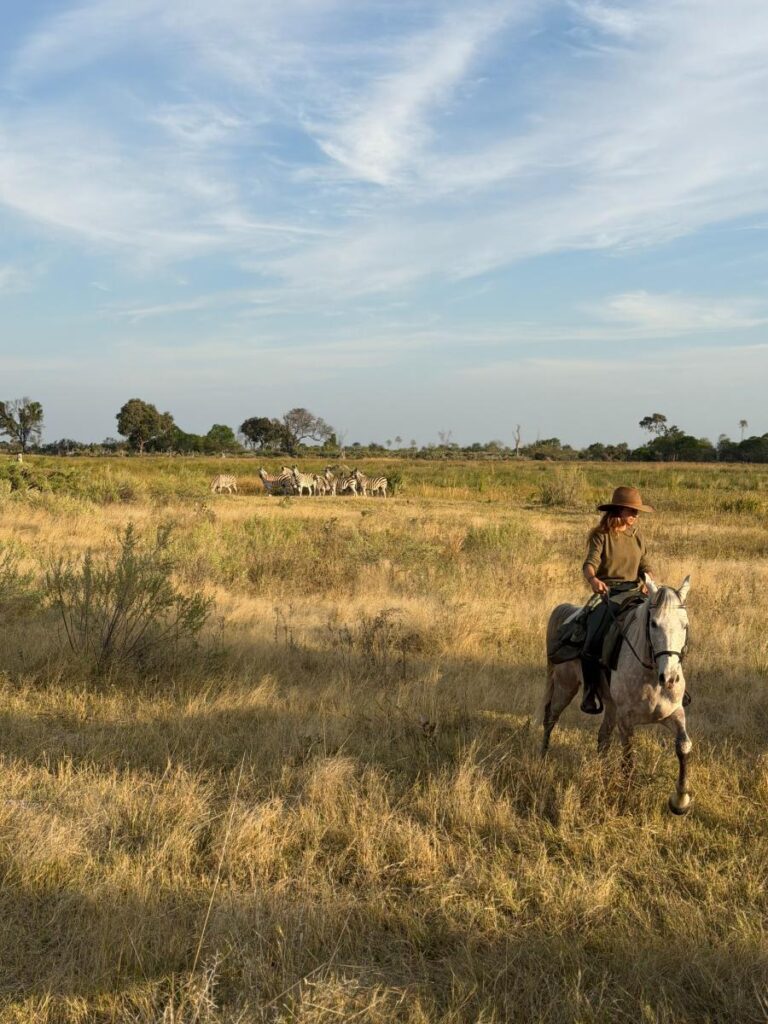
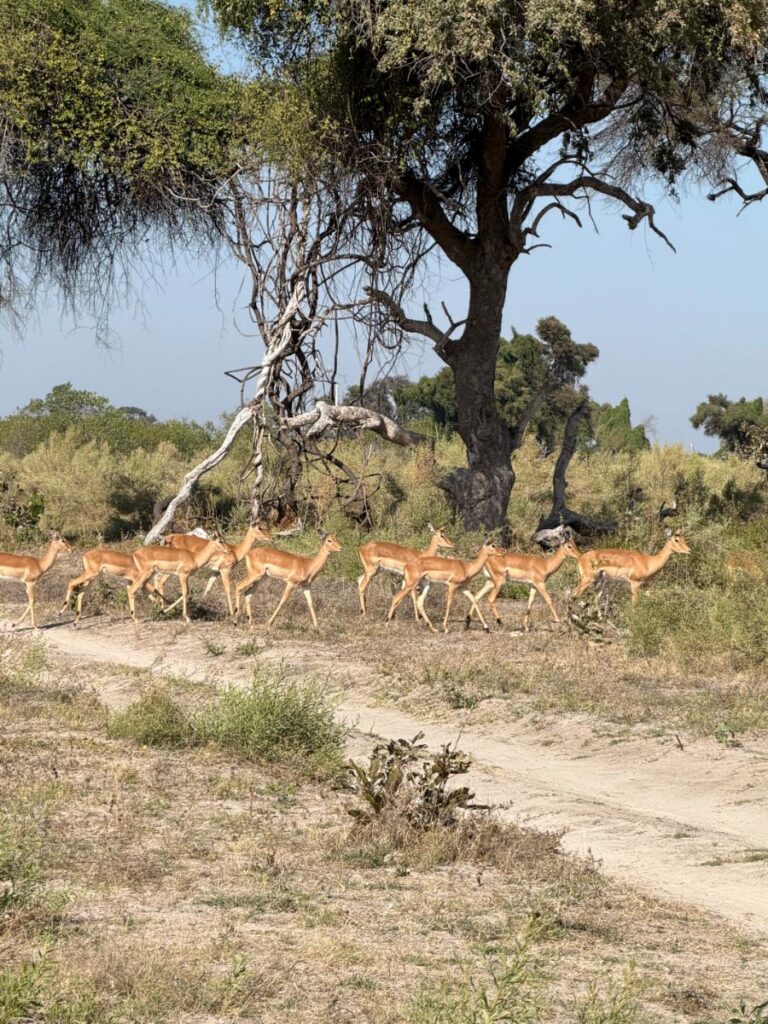
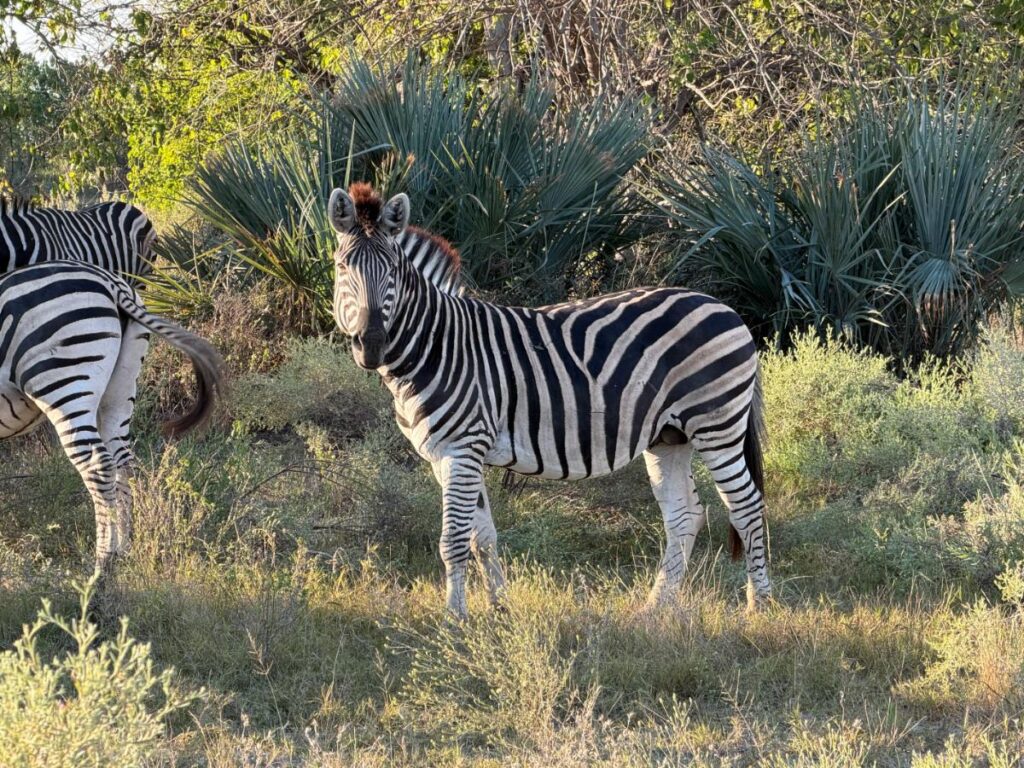
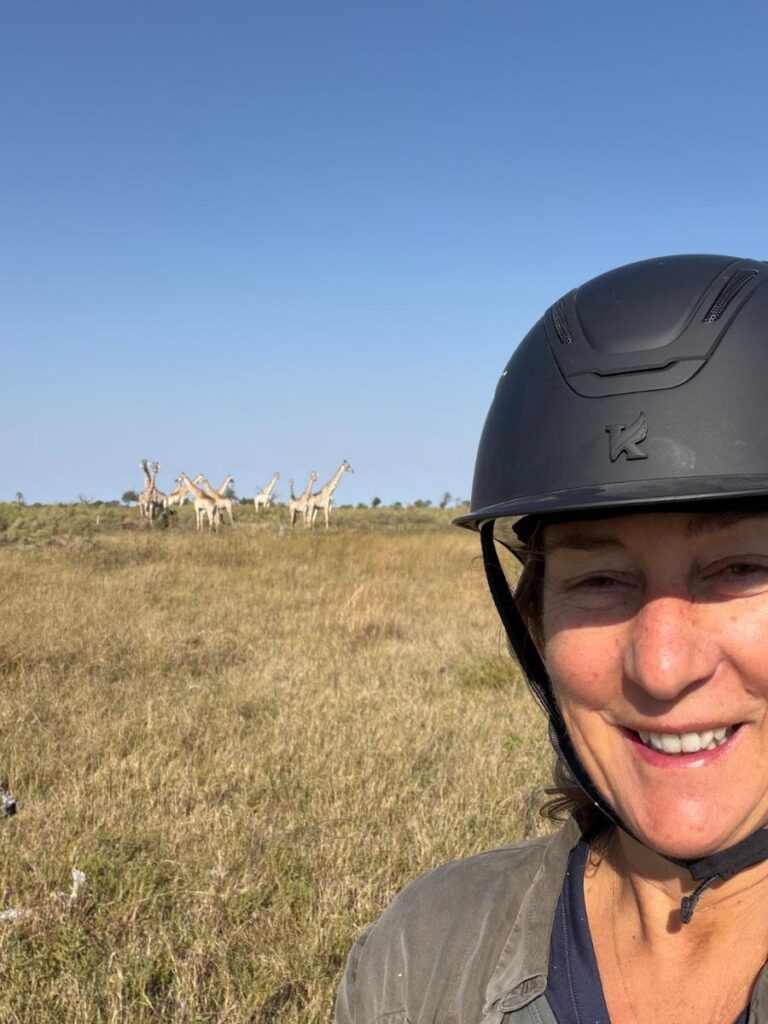
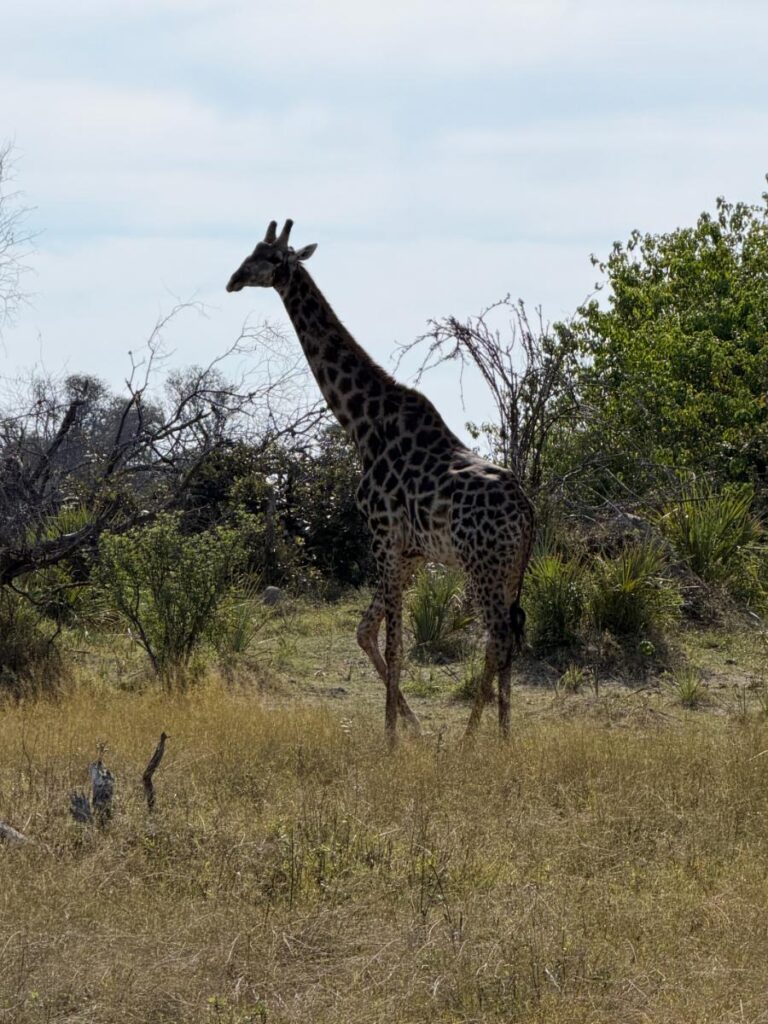
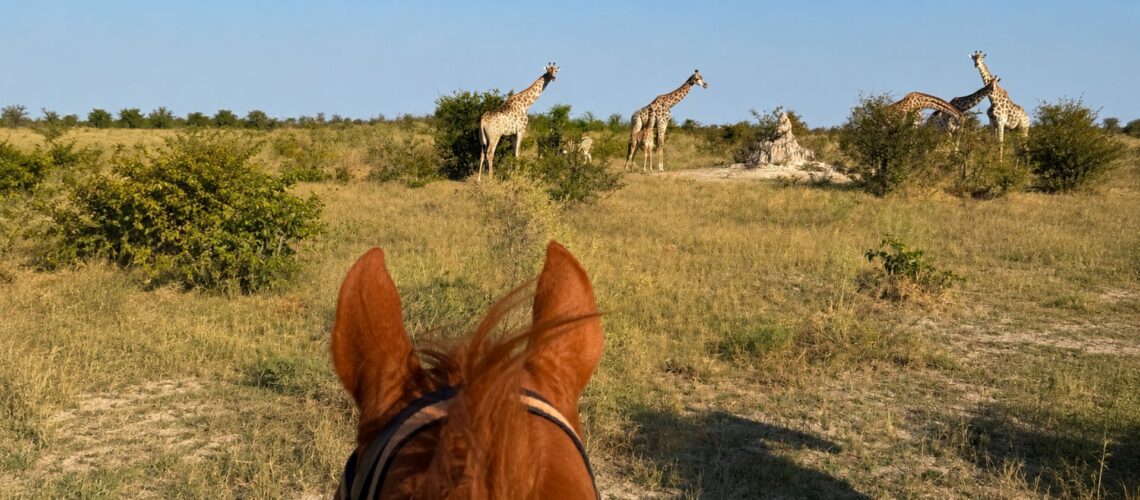
My brain, which is usually running at approximately four hundred miles an hour, genuinely recalibrated. Not because I switched off (I was intensely focused) but because the focus was directed outward rather than inward. At the horse beneath me. At the landscape ahead. At the giraffe on the horizon, and the zebras shifting in the grass, and the aardvark holes that demanded I pay attention to exactly where we were putting our feet.
Being stimulated by nature rather than by a screen or a deadline did something I genuinely hadn’t anticipated. It changed the way my brain was working. I came home feeling like a different version of myself, not because anything in my life had changed, but because I had recalibrated something inside it.
The Horse Knows
There is something extraordinary about riding a horse through wild terrain. You are not just sitting on an animal; you are in a constant, wordless conversation with one.
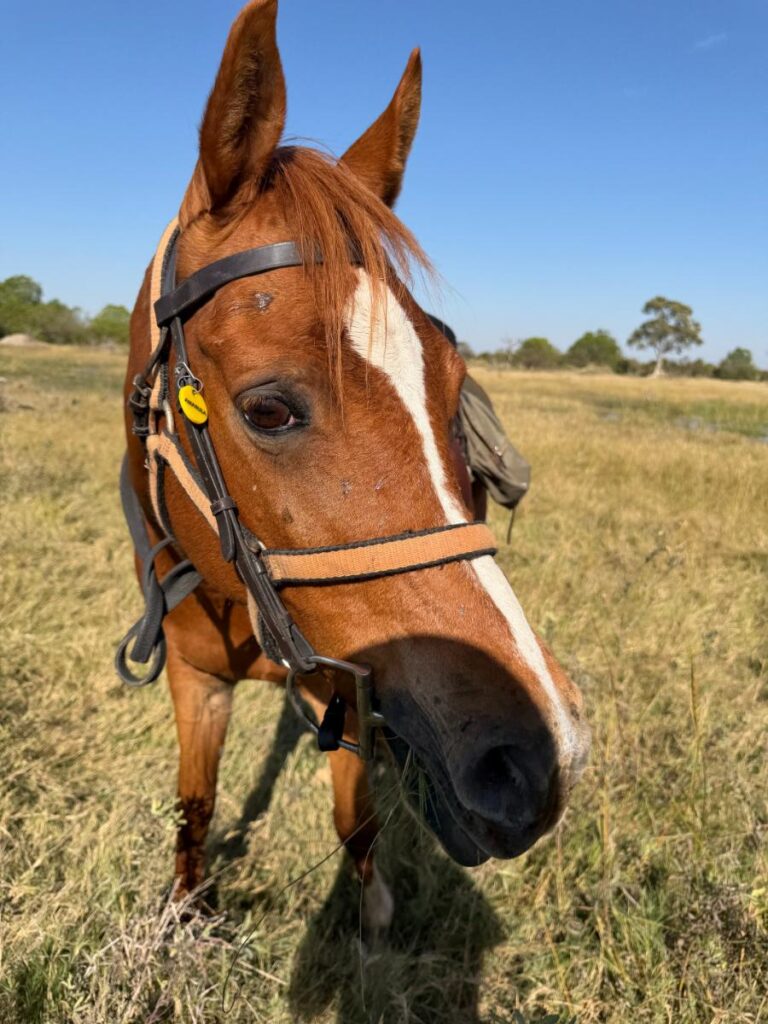
The horses at Cha Cha Metsi are entirely at home in the Delta. They know its sounds, its rhythms, its dangers. Occasionally, one would flinch at a rustle in the trees, ears forward, body suddenly alert, and then, just as quickly, settle again. Permanently tuned in to their environment: fully present, not anxious, aware without being overwhelmed.
I found myself thinking about the leaders I work with. How many of us are running on high alert all the time, but without that underlying groundedness? Reacting to every rustle rather than choosing which ones deserve attention? The horses had found something we spend a great deal of time and money in organisations trying to teach: the ability to be simultaneously switched on and at ease.
I suspect that is Part Three of this series. But I wanted to name it here, because it was one of the clearest things the trip gave me.
Realigning Expectations and What That Unlocked
I will be honest: I had imagined more cantering. Galloping through channels, water flying. What I hadn’t accounted for was the terrain: the aardvark holes, the scrub, the African savanna hares darting between the grasses, the sheer unpredictability of a landscape that is genuinely wild. You cannot ride fast through this part of the Okavango Delta, because the ground won’t let you. And the animals won’t either.
We did canter alongside giraffes and zebras, twice. And those moments were extraordinary precisely because they were not guaranteed.
But once I let go of the version of the trip I had scripted in my head, the one I actually had was better. Quieter. More surprising. More mine.
I thought about Catherine in that moment. She would have loved every single second of this: the pace of it, the intimacy of it, the fact that you are close enough to a giraffe to feel ridiculous and privileged and very small all at once. She turned 55 in hospital. She didn’t get her one day. And sitting on a horse in the Okavango Delta, watching a herd of zebras move across the grass in the early morning light, I was glad, properly, wholeheartedly glad, that I hadn’t waited for mine.
What I Brought Home
I came back with photographs I will never delete, and a particular kind of tiredness that feels earned rather than depleted.
I also came back with something less tangible but more useful: the clear-eyed recognition that I had been carrying too much. Running too fast. Keeping too much in my head. The silence of the Delta (and, yes, the very loud silence of the hippos) has a way of making that visible. And once you’ve seen it, it’s hard to unsee.
Since returning, I have been more deliberate about what I take on and what I let go. More conscious of where my energy is best directed, and where I am simply filling space out of habit. It is, not coincidentally, exactly the conversation I have with the leaders I work with, and I suspect I needed to hear it as much as anyone.
If you said yes to something that you haven’t quite got to yet, I hope this is useful. The “one day” thing is real. The time that passes between deciding and doing is real. And what’s on the other side (whatever your version of the Okavango Delta looks like) is almost certainly worth it.
Even the aardvark holes.