

I didn’t look at the price. I didn’t check my diary. I didn’t ask for time to think about it.
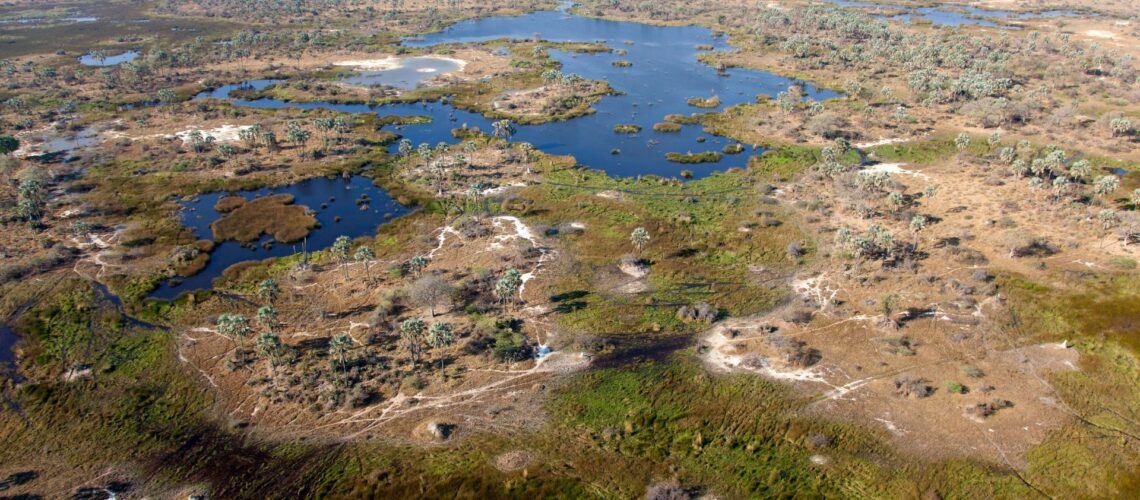
This Friday, I fly to Botswana. I’ll be on horseback in the Okavango Delta, riding through one of the most extraordinary landscapes on earth. It’s a trip I have described to myself for years as “one day.” And the reason it’s finally happening has nothing to do with courage, or planning, or having everything perfectly in place.
It happened because I lost one of my best friends.
When “One Day” Runs Out
This time last year, the person who was godmother to my daughter, a mother of four boys and one of the warmest and most vibrant people I have ever known, became seriously ill without any warning. She turned 55 in hospital. Three months later, she was gone.
It was a shock to everyone who loved her. And it left a particular kind of silence that I suspect anyone who has lost someone suddenly will recognise.
Into that silence, a message arrived from my friend Paula.
“Hi Jules. Hope you’re well. You said to me some time ago that if I was ever planning a riding trip, to let you know. Well, I’m planning a riding safari in Botswana next year…”
I replied within minutes. One hundred percent yes.
Because here is what losing my friend had quietly taught me: the things we file under “one day” don’t wait for us. One day is not a plan. It is a postponement. And I had spent long enough watching someone I loved miss the years she deserved to feel absolutely certain that I was not going to look at that message and say “let me think about it.”
What a Single Yes Unlocks
What I didn’t anticipate was what else would follow that one decision.
I started riding again, properly and regularly, for the first time in years. Something I had always loved but quietly let slip. The trip gave me a reason, and the reason gave me back something I hadn’t realised I’d lost.
That is the thing about saying yes to one big thing. It tends to unlock a whole series of smaller things that matter just as much.
I have been thinking about this a great deal in the context of the work I do with leaders in pharmaceutical, life sciences, and technology organisations. We talk a lot about resilience. We talk about performance, managing through difficulty, and sustaining teams under pressure. We talk considerably less about joy. About fulfilment. About what it actually means to live well, not just lead well, and whether those two things might, in fact, be the same conversation.
I think they are.
Wellbeing and Leadership Are Not Separate Conversations
There is a tendency, particularly among high-performing leaders in technical environments, to treat personal wellbeing as something to be addressed once the important work is done. A reward, rather than a foundation. A luxury, rather than a condition of sustained performance.
That framing is understandable. It is also, I would argue, quietly dangerous.
Research consistently links leader wellbeing to team climate, decision quality, and long-term organisational resilience.1 Leaders who are depleted, who have been postponing the things that restore them, do not suddenly become energised by hitting a target or clearing a backlog. The restoration has to come from somewhere real.
For me, it came from a message about horses in Botswana. For others it will be something entirely different. The specifics matter less than the underlying question: what have you been filing under “one day,” and how long has it been sitting there?
This Is Not About Grand Gestures
I want to be clear about something. This is not an argument for spontaneous extravagance, or for ignoring the very real practical constraints that shape most people’s lives. Not everyone can book a riding safari. Not everyone should.
What I am talking about is something smaller and more fundamental: the habit of noticing when we have been quietly putting our own lives on hold, and asking ourselves why.
Sometimes the answer is genuinely practical. Sometimes it is fear. And sometimes, if we are honest, it is simply inertia, dressed up as responsibility.
Whether you are reading this thinking “I genuinely don’t have time for that yet” or “I have no excuse not to” – both are valid. The time comes. And when it does, I hope you say yes.
I will be back in July with the second part of this: the reality of riding through the Okavango Delta, and whatever I bring home beyond the photographs.
Frequently Asked Questions About Wellbeing & Leadership
Leaders who routinely deprioritise their own wellbeing tend to operate from a position of depletion rather than energy. This affects not just personal performance but team climate, decision-making, and the signals a leader sends to those around them. When a leader models consistent self-neglect, it becomes, implicitly, a team norm. Treating personal wellbeing as foundational rather than incidental is not about indulgence; it is about the conditions that make sustained, effective leadership possible in the first place.
It tends to be subtle. It is the trip that never gets booked, the creative interest that gets set aside until a quieter period arrives, the friendship that gets maintained only via good intentions. In technical environments particularly, where project timelines and performance metrics are highly visible, personal fulfilment can feel like a soft priority. Over time, the accumulation of those small postponements has a real cost to energy, motivation, and sense of purpose, all of which directly affect leadership quality.
The most effective starting point is usually not a grand restructure of time, but a shift in permission. Leaders in science and technology environments often hold themselves to a high standard of output and self-sufficiency; accepting that rest, joy, and personal fulfilment are not distractions from good leadership, but part of it, is frequently the harder step. From there, practical habits tend to follow more naturally: protecting non-negotiable personal time, building in activities that restore rather than deplete, and being deliberate about what gets the “one day” label.
The Permission You Don’t Need to Wait For
The conversation about wellbeing and leadership is not one for the end of the quarter, or after the next appraisal cycle, or when things are finally a little calmer. It is for now. Not because life is short in the abstract, but because experience tends to make it concrete, sometimes all at once, and without warning.
If something has been sitting in your “one day” drawer for longer than you care to admit, this might be the moment to take it out and look at it properly.
Part two of this reflection will land in July, after the Okavango Delta has had its say.